Löberitz Hybrid Park


Wind and Sun – a Strong Combination
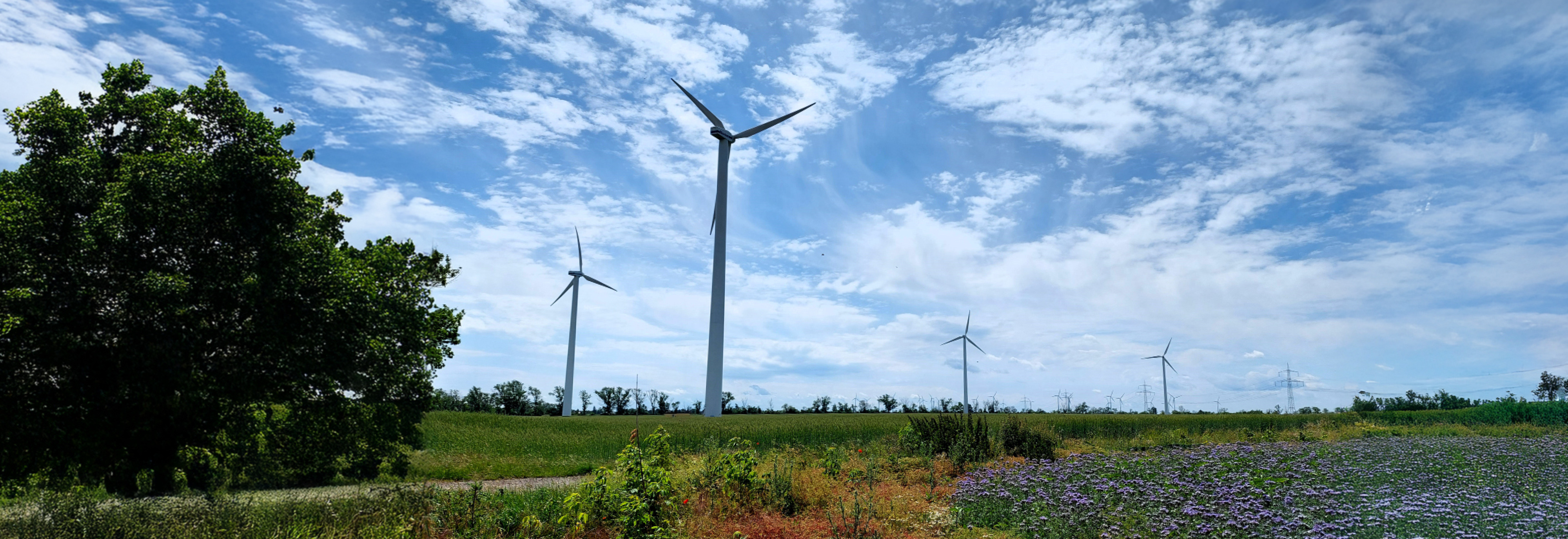
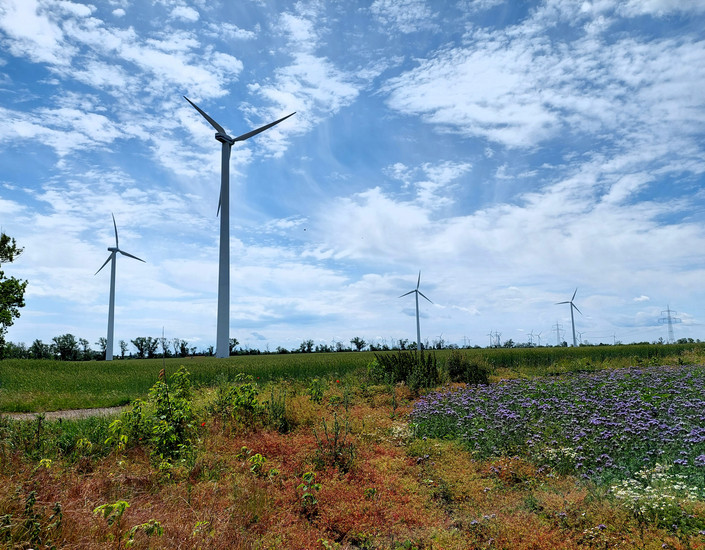
A forward-looking energy project is being developed in the district of Anhalt-Bitterfeld: the Löberitz hybrid park combines wind power and photovoltaics at a shared grid connection point. The combination of both technologies balances the natural fluctuations of wind and sunlight. This results in a more consistent electricity production that strengthens security of supply and uses land efficiently.
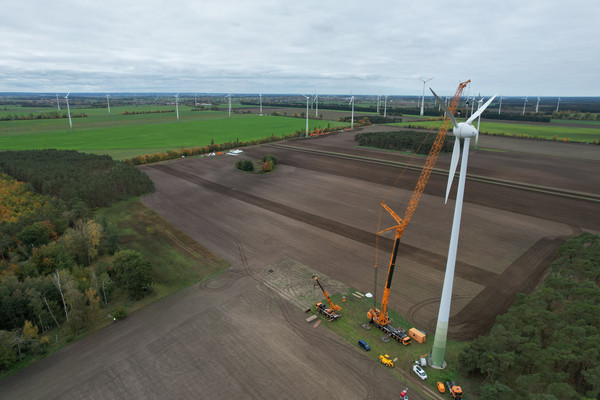
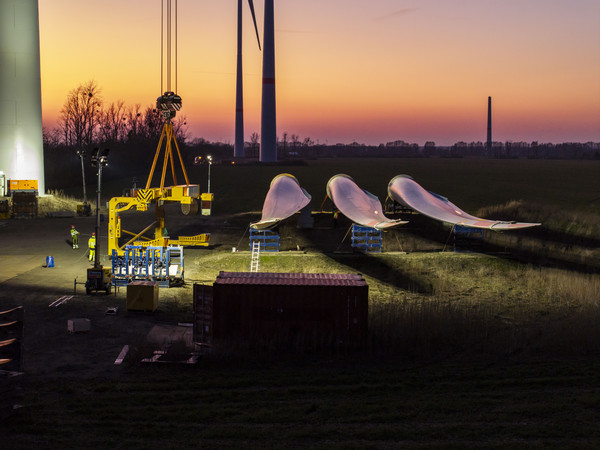
The wind farm is being modernised as part of a repowering project: three new wind turbines will replace five older turbines. With fewer turbines, ten times more energy will be generated – thanks to modern, more powerful technology.
At a Glance
Location: Towns of Zörbig and Bitterfeld-Wolfen, district of Anhalt-Bitterfeld
Technology: Combination of wind energy and photovoltaics with a shared grid connection point
Special feature: Repowering of five older turbines with three modern wind turbines of the type Vestas V172–7.2
Added value for the region: Municipal participation (0.3 ct/kWh), local contract awards
Environmentally friendly energy supply for around 24,000 households
Potential to avoid emissions of around 60,000 tonnes of CO₂ per year
Construction Diary
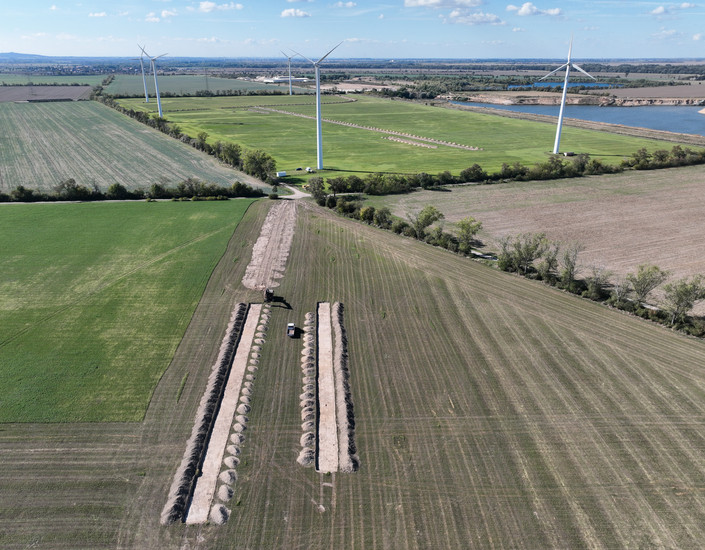
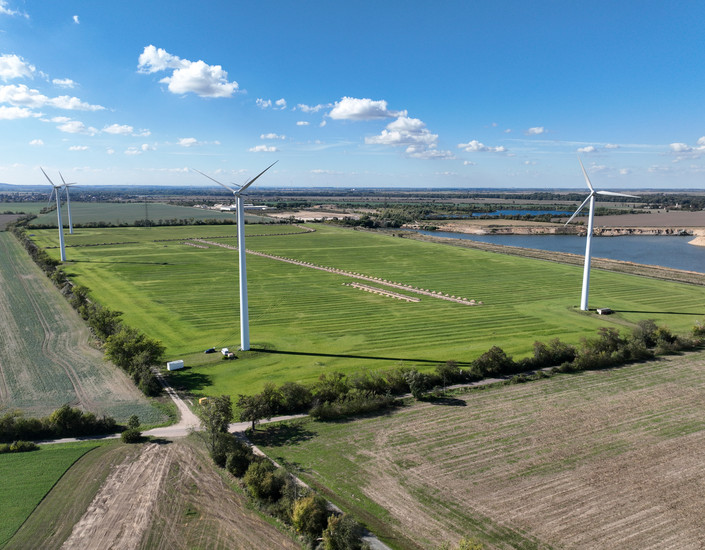
From planning to commissioning – follow the Löberitz hybrid park on its journey. In our construction diary, we show how the project gradually takes shape step by step.
- First page
- 1
- 2
- Last page
Project Information
We are forward-thinking project developers in the field of renewable energies. Every single step of our planning is based on solid experience. This provides both you and us with the certainty needed for swift construction progress.
Wind Farm: Facts and Timeline
| Total Capacity | 21.6 megawatts (MW) |
|---|---|
| Turbines | 3 turbines |
| Rated Capacity | 7.2 MW |
| Annual Energy Yield | 65.7 gigawatt hours (GWh) |
| Hub height (height of the nacelle) | 175 metres |
| Rotor blade length | 86 metres |
| Total height of the turbine | 261 metres |
| Cut-in wind speed | 3 metres per second (light breeze) |
| Cut-out wind speed | 27 metres per second |
| Energy supply | Construction of a dedicated substation with a 110 kV high-voltage line within the hybrid park area |
| Connection to the power grid | The environmentally friendly electricity produced is fed into the grid of Mitteldeutsche Netzgesellschaft Strom mbH via a dedicated substation. |
Solar Park: Facts and Timeline
| Rated capacity | 19.99 megawatt peak (MWp) |
|---|---|
| Annual energy yield | 20.51 gigawatt hours (GWh) |
| Area | 15.3 hectares |
| Energy supply | Construction of a dedicated substation with a 110 kV high-voltage line within the hybrid park area |
| Connection to the power grid | The environmentally friendly electricity produced is fed into the grid of Mitteldeutsche Netzgesellschaft Strom mbH via a dedicated substation. |
Hybrid Park
Two Energy Sources, One Goal: Cleanly Generated Electricity
The Löberitz hybrid park combines wind energy and photovoltaics – two renewable energy sources that complement each other perfectly. While the sun primarily generates electricity during the day and in the summer months, the wind turbines produce energy particularly during the windy autumn and winter months. This creates a more consistent and predictable electricity production throughout the year.
Both the wind farm and the photovoltaic installation feed their electricity into the public grid via a shared grid connection point.
The Substation: Connection Point Between Wind, Sun and Grid
For the hybrid park, we are constructing a dedicated substation that transforms the electricity generated from wind and sun to a higher voltage level of 110 kilovolts (kV). Only then can the energy be fed into the MITNETZ STROM grid and transported over longer distances.
Repowering
Repowering at the Löberitz Wind Farm
The repowering of the Löberitz wind farm demonstrates the potential of modernising existing sites. Repowering refers to the replacement of older wind turbines with modern, more powerful models. This makes it possible to use existing infrastructure more efficiently without requiring additional land.
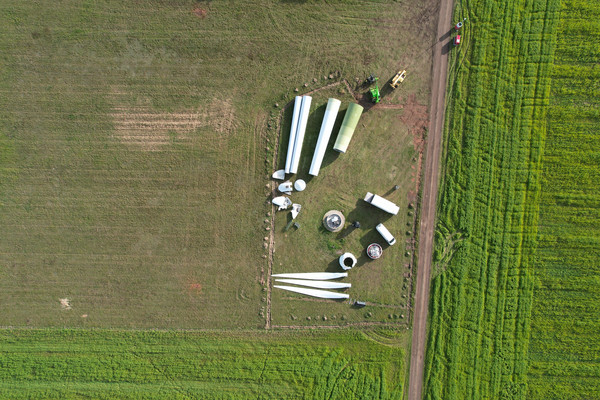
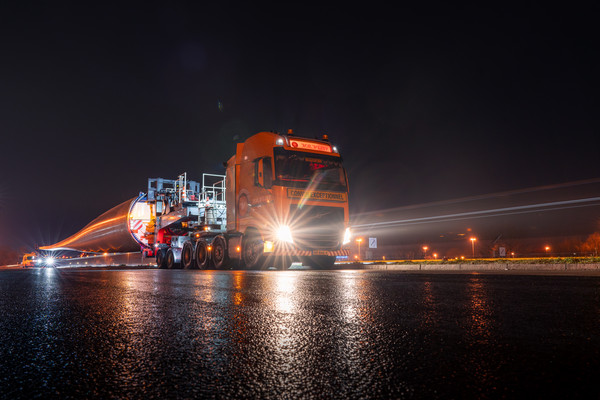
In Löberitz, five older turbines of the type Vestas V52 will be replaced by three modern wind turbines of the type Vestas V172-7.2 MW. This will generate ten times more green electricity on a smaller footprint – an important step towards an autonomous and secure energy supply.
The Advantages:
- Less turbines, more output: 5 older turbines (0.85 MW) are replaced by 3 new ones (7.2 MW).
- Significantly higher capacity: total capacity increases from 4.25 MW to 21.6 MW – five times as much.
- Substantially more electricity generation: annual energy yield increases from 6.4 GWh to 65.7 GWh – ten times as much.
Compensation and offset measures
Compensation and Ecological Enhancement: A Sustainable Balance Between the Energy Transition and Nature
When an energy project is developed, it temporarily changes the surrounding environment. That is why VSB places great importance on protecting nature and the landscape as effectively as possible and compensating for any impacts. After construction work has been completed, the original condition of the land will be restored so that it can once again be used for agriculture.
Impacts on nature and the landscape that cannot be avoided are assessed in the Landscape Management Plan. This results in a comprehensive concept of protection, avoidance and compensation measures defined as part of the approval process under the Federal Immission Control Act (BImSchG) and the Building Regulations of the State of Saxony-Anhalt (BauO LSA). The aim is to offset soil sealing, preserve habitats and create new, species-rich biotopes.
Species and Nature Conservation During the Planning and Construction Phase
As early as the planning phase, the area in Löberitz was examined for the presence of protected species – including the European hamster. The study confirmed that there are no populations of European hamsters in this area. Nevertheless, the land will be regularly monitored during the construction period to ensure the protection of wildlife at all times.
During the construction phase, the project will be accompanied by external ecological construction supervision. This team monitors the implementation of all environmental, nature conservation and species protection requirements. These include construction scheduling, the protection of trees and shrubs, inspections of hollow trees for bats and beetle species, and protective measures for amphibians, otters and beavers. This ensures that no disruptive work takes place near the breeding and reproduction sites of sensitive animal species. All steps in the process are carefully documented with protocols, photographs and regular reports to the responsible authorities.
After Construction: New Habitats
After the realisation of the Löberitz hybrid park, targeted compensation and offset measures will be implemented to balance the impacts on nature and the landscape. These measures help to ecologically enhance the surrounding area, create new habitats and promote biodiversity in the long term.
- Planting of a shrub and tree hedge covering around 900 m² at the substation – enhancing the landscape and providing shelter and food for birds, insects and small animals
- Creation of an avenue of fruit trees with around 130 trees near the Löberitz wind farm – offering a structurally rich habitat and a food source for native animal species
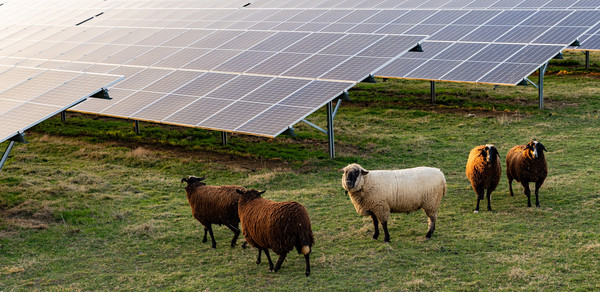
- On the site of the photovoltaic installation, the sowing of species-rich grassland and grazing by dwarf sheep will create an ecologically valuable habitat. The flowering plants provide food and shelter for bees, butterflies and other pollinating insects