Löberitz Hybrid Park


Wind and solar – a strong combination
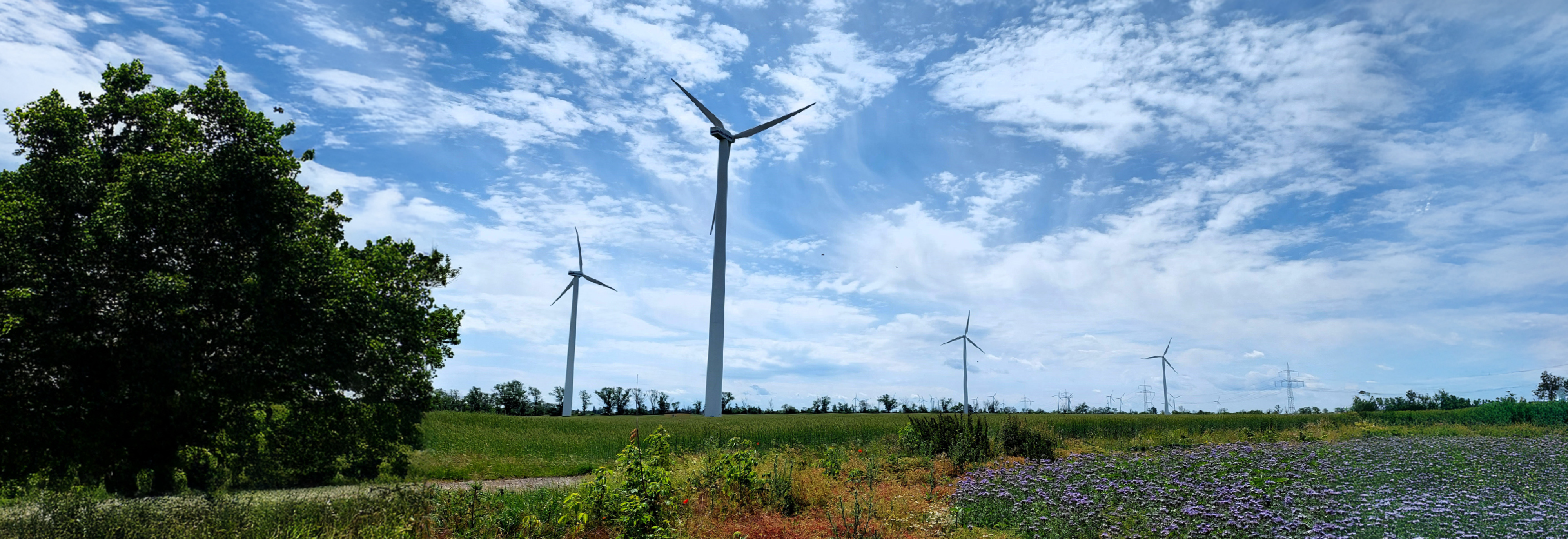
The Löberitz hybrid park is being developed in the Anhalt-Bitterfeld district. It combines wind energy and solar PV at a shared grid connection point. The generation profiles of the two technologies complement each other over time: while solar PV generates electricity mainly during the day and in sunnier months, wind energy often produces electricity at different times. Both parts of the project share the hybrid park’s grid infrastructure.
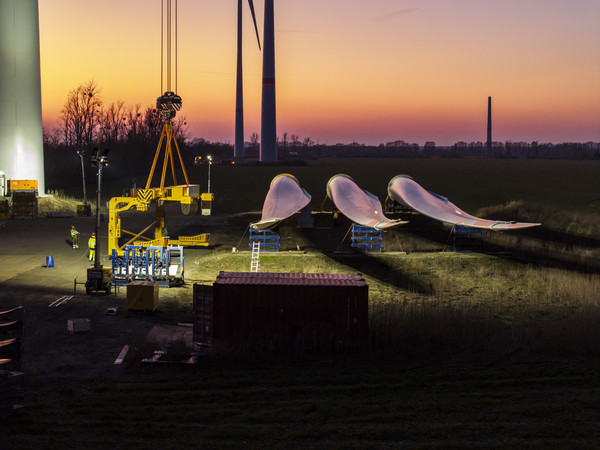
The wind farm is being modernised through repowering: three new wind turbines are replacing five older turbines. As a result, the wind farm’s forecast annual energy yield is expected to increase from 6.4 GWh to 65.7 GWh.
At a Glance
Location: Towns of Zörbig and Bitterfeld-Wolfen, district of Anhalt-Bitterfeld
Technology: Combination of wind energy and photovoltaics with a shared grid connection point
Special feature: Repowering of five older turbines with three wind turbines of the type Vestas V172–7.2
Added value for the region: Municipal participation (0.3 ct/kWh), local contract awards
Electricity generation equivalent to the calculated annual consumption of approximately 24,000 households.
Wind energy and solar PV generate electricity from renewable energy sources.
Construction Diary
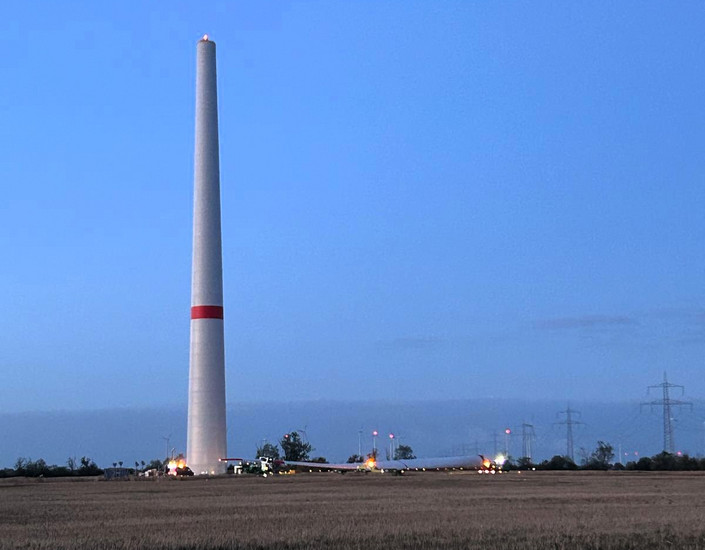
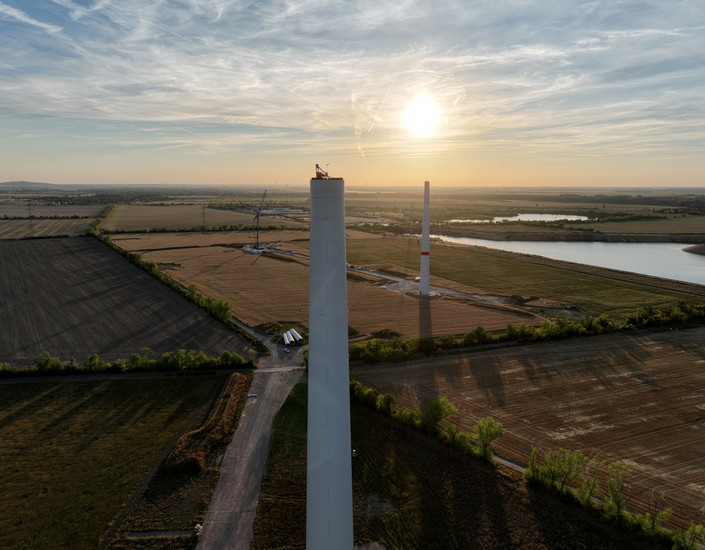
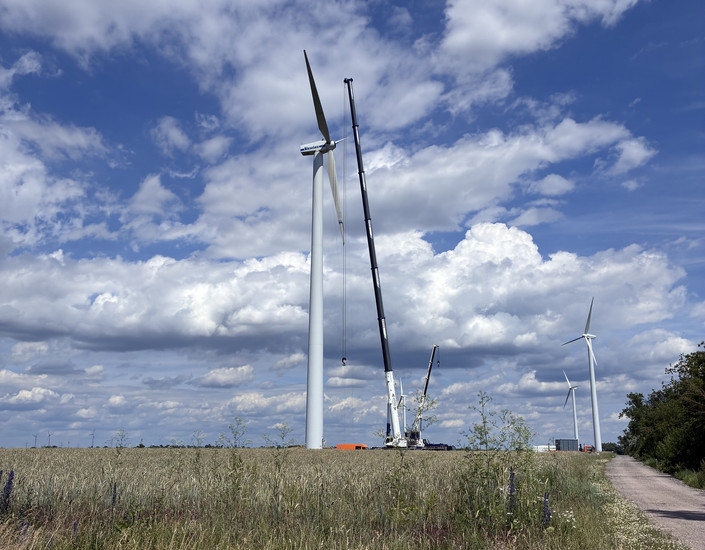
From planning to commissioning – follow the Löberitz hybrid park on its journey. In our construction diary, we show how the project gradually takes shape step by step.


Project Information
In developing the hybrid park, we draw on our experience in planning and delivering wind and solar projects, as well as on defined planning and project processes. This provides a sound basis for the further implementation of the project.
Wind Farm: Facts and Timeline
| Total Capacity | 21.6 megawatts (MW) |
|---|---|
| Turbines | 3 turbines |
| Rated Capacity | 7.2 MW |
| Annual Energy Yield | 65.7 gigawatt hours (GWh) |
| Hub height (height of the nacelle) | 175 metres |
| Rotor blade length | 86 metres |
| Total height of the turbine | 261 metres |
| Cut-in wind speed | 3 metres per second (light breeze) |
| Cut-out wind speed | 27 metres per second |
| Energy supply | Construction of a dedicated substation with a 110 kV high-voltage line within the hybrid park area |
| Connection to the power grid | The electricity generated by the wind farm is fed into the grid of Mitteldeutsche Netzgesellschaft Strom mbH via a dedicated substation. |
Solar Park: Facts and Timeline
| Rated capacity | 19.99 megawatt peak (MWp) |
|---|---|
| Annual energy yield | 20.51 gigawatt hours (GWh) |
| Area | 15.3 hectares |
| Energy supply | Construction of a dedicated substation with a 110 kV high-voltage line within the hybrid park area |
| Connection to the power grid | The electricity generated by the solar PV installation is fed into the grid of Mitteldeutsche Netzgesellschaft Strom mbH via a dedicated substation. |
Hybrid Park
Two energy sources, one shared grid connection point
The Löberitz hybrid park combines wind energy and photovoltaics – two renewable energy sources that complement each other perfectly. While the sun primarily generates electricity during the day and in the summer months, the wind turbines produce energy particularly during the windy autumn and winter months. This creates a more consistent and predictable electricity production throughout the year.
Both the wind farm and the photovoltaic installation feed their electricity into the public grid via a shared grid connection point.
The Substation: Connection Point Between Wind, Sun and Grid
For the hybrid park, we are constructing a dedicated substation that transforms the electricity generated from wind and sun to a higher voltage level of 110 kilovolts (kV). Only then can the energy be fed into the MITNETZ STROM grid and transported over longer distances.
Repowering
Repowering at the Löberitz wind farm
The repowering of the Löberitz wind farm demonstrates the potential of modernising existing sites. Repowering involves replacing older wind turbines with modern, higher-capacity models. This can allow existing sites and infrastructure to continue to be used.
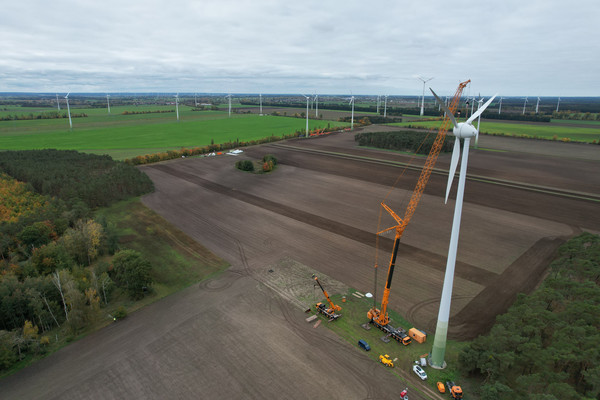
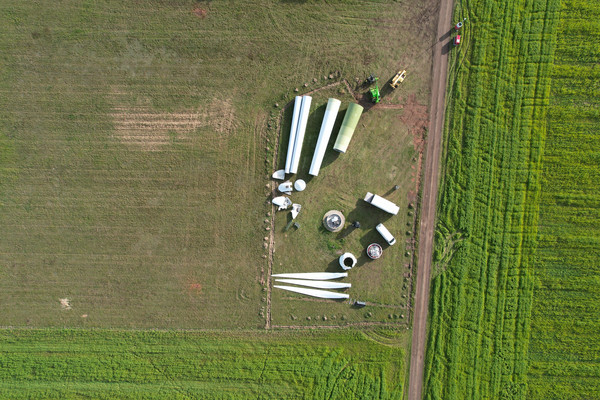
In Löberitz, five older Vestas V52 turbines are being replaced by three modern Vestas V172-7.2 MW wind turbines. Installed capacity will increase from 4.25 MW to 21.6 MW. At the same time, the forecast annual energy yield will increase from 6.4 GWh to 65.7 GWh – with fewer wind turbines.
The Advantages:
- Less turbines, more output: 5 older turbines (0.85 MW) are replaced by 3 new ones (7.2 MW).
- Significantly higher capacity: total capacity increases from 4.25 MW to 21.6 MW – five times as much.
- Substantially more electricity generation: annual energy yield increases from 6.4 GWh to 65.7 GWh – ten times as much.
Compensation and offset measures
Compensation and replacement measures for nature and landscape
The construction and operation of an energy project involve impacts on nature and the landscape. Measures to avoid, protect against and compensate for these impacts are therefore considered from the planning stage onwards. Areas used temporarily for construction are restored once the work has been completed in accordance with planning and permitting requirements and, where provided for, returned to agricultural use.
As part of the planning process, the Löberitz site was assessed for the presence of protected species, including the European hamster. The survey confirmed that no European hamsters were present in this area. The site will continue to be monitored as construction progresses so that any changes can be identified at an early stage and any necessary protective measures implemented.
An independent ecological construction supervisor supports the project throughout the construction phase. This includes monitoring compliance with the environmental, nature conservation and species protection requirements defined for the project. Measures include construction scheduling, the protection of trees and shrubs, inspections of cavity trees for bats and beetle species, and protective measures for amphibians, otters and beavers. Work near sensitive breeding and reproduction sites is planned and monitored in accordance with the applicable protection requirements.
After construction: new habitats
Following completion of the Löberitz hybrid park, specific compensation and replacement measures will be implemented to address impacts on nature and the landscape. These measures are intended to support ecological enhancement of the surrounding area, create new habitats and contribute to biodiversity over the longer term.
- Planting of a shrub and tree hedge covering around 900 m² at the substation – enhancing the landscape and providing shelter and food for birds, insects and small animals
- Creation of an avenue of fruit trees with around 130 trees near the Löberitz wind farm – offering a structurally rich habitat and a food source for native animal species
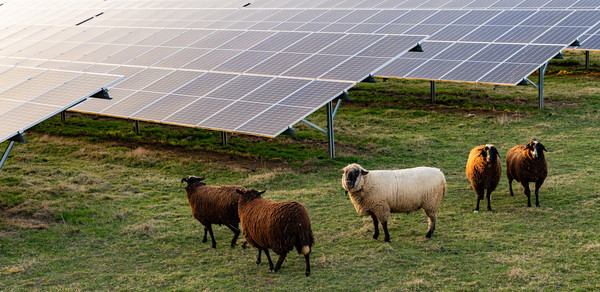
- On the site of the photovoltaic installation, the sowing of species-rich grassland and grazing by dwarf sheep will create an ecologically valuable habitat. The flowering plants provide food and shelter for bees, butterflies and other pollinating insects